

Table of Contents
- Why Proper Care Matters for Performance Golf Apparel
- Prepare Your Apparel: Sorting and Pre-Treatment
- How to Remove Sweat Stains from Golf Shirts
- Best Laundry Detergent for Synthetic Fabrics
- How to Wash Moisture-Wicking Clothing
- Drying Methods: Air Dry vs. Tumble Dry
- Long-Term Care and Odor Prevention
- Common Mistakes to Avoid
- Frequently Asked Questions
Last Updated: September 28, 2026
Why Proper Care Matters for Performance Golf Apparel
Your clean performance golf apparel is built with advanced synthetic fibers designed to wick moisture, resist wrinkles, and maintain shape through countless rounds. But improper washing destroys these engineered benefits faster than anything else. The fabric softeners, high heat, and aggressive cycles that work fine for cotton will degrade the stretch, break down the moisture-wicking fibers, and trap odor in the fabric permanently.
This guide covers exactly how to clean performance golf apparel so it stays functional for years. The difference between a shirt that performs like new after 50 washes and one that feels stiff comes down to a few critical steps most golfers skip.
Prepare Your Apparel: Sorting and Pre-Treatment
Preparation prevents color bleeding, shrinkage, and permanent stains. Spend five minutes here and your gear stays game-ready.
Sort by Fabric Type and Color
Separate moisture-wicking polyester blends from heavier items and keep dark colors away from light colors to prevent permanent color transfer.
Sort by these groups:
- Dark polyester blend golf shirts together
- Light-colored moisture-wicking apparel in its own load
- Any mesh or delicate synthetic pieces separately
- Heavy items like jackets or pants in a third load
Turn Garments Inside Out
Turning garments inside out protects heat-pressed graphics and logos from friction while the more durable inside contacts detergent and agitation.
Address Stains Before Washing
Sweat stains, sunscreen residue, and grass marks set permanently in hot water, so pre-treat with cold water first.
For visible stains:
- Blot excess moisture with a clean cloth (don't rub)
- Apply enzyme-based cleaner directly to the stain
- Let it sit for 15-30 minutes
- Gently brush the area with a soft brush
- Rinse with cold water before washing
This approach works for most outdoor stains without damaging the synthetic fibers.
How to Remove Sweat Stains from Golf Shirts
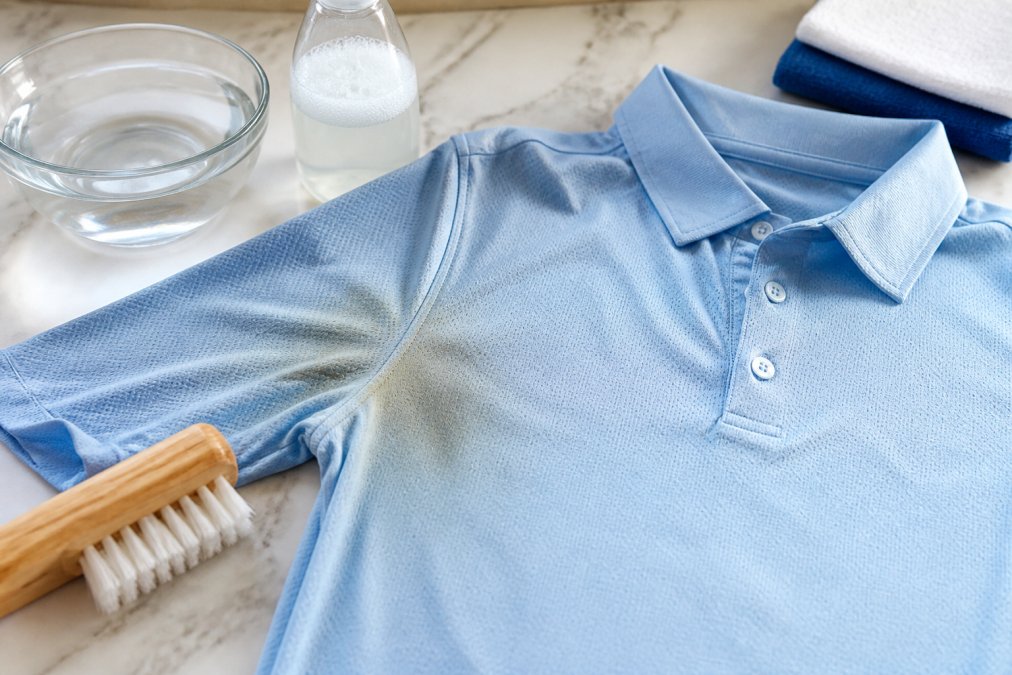
Sweat and sunscreen buildup traps odor and reduces breathability, making immediate treatment essential for long-term performance.
The Chemistry Behind Sunscreen and Sweat Stains
Sunscreen oils and sweat proteins bond chemically to polyester fibers. Regular detergent cannot break these bonds. Heat accelerates cross-linking, making stains permanent and degrading the moisture-wicking coating. Over multiple washes with set stains, wicking capability diminishes measurably within one season.
Treat Sunscreen and Perspiration Buildup
Enzyme-based cleaners contain proteases that break down protein chains in sweat and sunscreen before they cross-link, preventing permanent embedding.
The process is simple:
- Rinse the stained area with cold water immediately after wearing (within 2-4 hours is ideal)
- Apply enzyme-based cleaner directly to the stain
- Let it sit for 20-30 minutes (don't let it dry completely, drying accelerates cross-linking)
- Gently work the cleaner into the fabric with a soft brush using circular motions
- Rinse thoroughly with cold water until no cleaner residue remains
- Wash normally with cold water and enzyme-based detergent
Best Laundry Detergent for Synthetic Fabrics
Standard laundry detergent leaves residue on synthetic fabrics and reduces breathability. Choose a detergent made for performance or synthetic fabrics, labeled "for athletic wear" or "for synthetic fabrics."
Key features to look for:
- Free of optical brighteners
- Enzyme-based formula (breaks down sweat and oils)
- Mild surfactants that don't coat the fabric
- No fabric softening agents built in
- Biodegradable or eco-friendly options available
Skip Fabric Softeners and Bleach
Fabric softeners coat fibers with a waxy layer, destroying moisture-wicking and trapping odor. Bleach breaks down polyester polymer chains, causing yellowing and brittleness. Never use either on performance apparel.
What to avoid:
- Fabric softeners (liquid or sheets)
- Bleach or oxygen-based whiteners
- Scented detergents with heavy perfume
- Detergents with optical brighteners
- Dryer sheets (they coat fabric like softener)
How to Wash Moisture-Wicking Clothing
The wash cycle matters as much as the detergent. High agitation and hot water degrade synthetic fibers. Gentle care preserves fabric structure and moisture-wicking.
Water Temperature and Cycle Selection
Cold water prevents shrinkage, protects color, avoids setting stains, and uses less energy.
Recommended wash settings:
- Water temperature: Cold (60°F or below)
- Cycle: Gentle or delicate
- Load size: Don't overstuff (clothes need space to move)
- Spin speed: Low spin to reduce stress on fibers
Mesh Laundry Bags for Extra Protection
A mesh laundry bag adds another layer of protection, especially for apparel with heat-pressed graphics or delicate details. The bag contains friction while still allowing water and detergent to reach the fabric.
Use a mesh bag for:
- Golf shirts with logos or graphics
- Apparel with stretch panels
- Lighter-colored or newer pieces
- Anything you want to last longer
Drying Methods: Air Dry vs. Tumble Dry
How you dry apparel determines whether it maintains shape and performance. Heat causes shrinkage, reduces elasticity, and can melt polymer chains in polyester blends.
Air Drying: The Gold Standard
Air drying is the best option for preserving performance apparel. Lay the garment flat on a clean surface or hang it on a clothesline in indirect sunlight. This takes longer but preserves the fabric completely and costs nothing.
Best practices for air drying:
- Lay flat on a clean towel or hang on a non-metal hanger in a well-ventilated area
- Avoid direct sunlight for extended periods (UV exposure fades colors and weakens synthetic fibers over time)
- Ensure air circulation, don't hang in a closed closet or damp basement
- Most performance apparel takes 2-4 hours to air dry completely
- Slight wrinkles that appear smooth out after one wear
Tumble Dry Low: When Speed Matters
If you must use a dryer, whether at home or while traveling, tumble dry low works if executed correctly:
- Use the lowest heat setting available (typically labeled "low" or "delicate heat")
- Remove the garment while slightly damp (after 20-30 minutes, not at the end of the cycle)
- Never use high heat, extra-dry, or auto-sense settings
- Skip the dryer sheet entirely (it coats fibers like fabric softener)
Travel and Limited-Laundry Scenarios
Hotel or rental laundry: Wash in cold water on a gentle cycle immediately after wearing. If a dryer is your only option, use tumble dry low and remove early. Hang damp garments in your room overnight to dry.
Preventing odor buildup during travel:
- Wash apparel every 2-3 days, not at the end of the trip
- Never store damp or sweaty apparel in a sealed suitcase
- Hang worn items in the open to air out between wears
- If you can't wash, soak in cold water with a small amount of white vinegar for 20 minutes, then hang to dry
Environmental Considerations
Performance apparel made from polyester and nylon blends sheds microplastics during washing and drying. While the amount per garment is small, it accumulates across millions of loads annually.
Reduce microplastic shedding:
- Air dry whenever possible (eliminates heat-related shedding)
- Wash less frequently (every 2-3 wears instead of after each wear, if the garment isn't visibly soiled)
- Use cold water (reduces fiber stress and shedding)
- Use a mesh laundry bag (contains loose fibers)
- Consider a washing machine filter designed to capture microplastics if you wash performance apparel frequently
Water conservation:
- Air drying uses zero water, while a typical dryer cycle uses 10-15 gallons of water for venting
- Washing in cold water uses less energy to heat water
- Hand-washing while traveling uses significantly less water than machine washing
Long-Term Care and Odor Prevention
Odor buildup is the biggest complaint about performance apparel. The issue isn't the fabric, it's bacteria trapped in the fibers from improper washing or drying. Once odor sets in, regular washing won't remove it.
Prevent odor before it starts:
- Wash apparel within 24 hours of wearing
- Never let damp apparel sit in a hamper
- Use cold water and enzyme-based detergent every wash
- Air dry completely before storing
- Store in a cool, dry place with good air circulation
Common Mistakes to Avoid
The biggest mistakes:
Hot water or high heat shrinks fabric and sets stains permanently. Standard detergent leaves residue that traps odor. Skipping pre-treatment makes stains permanent. Overstuffing prevents proper rinsing. Fabric softener or dryer sheets destroy moisture-wicking. Direct sunlight fades colors. Storing damp apparel breeds bacteria and odor.
Frequently Asked Questions
Can I wash golf apparel with regular cotton clothing?
No. Washing performance golf apparel separately from regular cotton clothing protects both. Synthetic fabrics and moisture-wicking materials have different washing requirements than cotton. Mixing them can trap moisture in high-performance fabrics, reduce breathability, and cause color bleeding. Always sort by fabric type before washing.
What is the best way to remove sweat stains from golf polos?
Treat sweat stains immediately with an enzyme-based cleaner or a paste of baking soda and water. Let it sit for 30 minutes before washing. Wash in cold water on a gentle cycle, then air dry to prevent the stain from setting permanently.
Should I air dry or machine dry performance golf apparel?
Air drying is the safest option for preserving moisture-wicking fabrics and heat-pressed graphics. Machine drying on low heat is acceptable for some synthetic blends, but high heat damages elastane and spandex, reducing stretch and causing shrinkage. Always check the garment label. Air drying extends the life of your apparel significantly.
How do I prevent odors in synthetic golf clothing?
Wash performance apparel promptly after use to prevent odor buildup in synthetic fibers. Use an enzyme-based laundry detergent designed for technical fabrics. Avoid fabric softeners, which trap moisture and bacteria. Ensure complete drying before storing. For persistent odors, soak in cold water with white vinegar (1 part vinegar to 4 parts water) for 30 minutes before washing.


