

Table of Contents
- What Makes the Best Moisture Wicking Outdoor Shirts for 2026
- Key Features to Look for in Moisture Wicking Shirts
- How to Choose Moisture Wicking Fabric for Your Activity
- Sun Protection Shirts for Hiking: UPF Ratings Explained
- Moisture Wicking Shirt Care Tips to Extend Performance
- Fit, Durability, and Layering for Outdoor Performance
- Frequently Asked Questions
Last Updated: September 22, 2026
What Makes the Best Moisture Wicking Outdoor Shirts for 2026
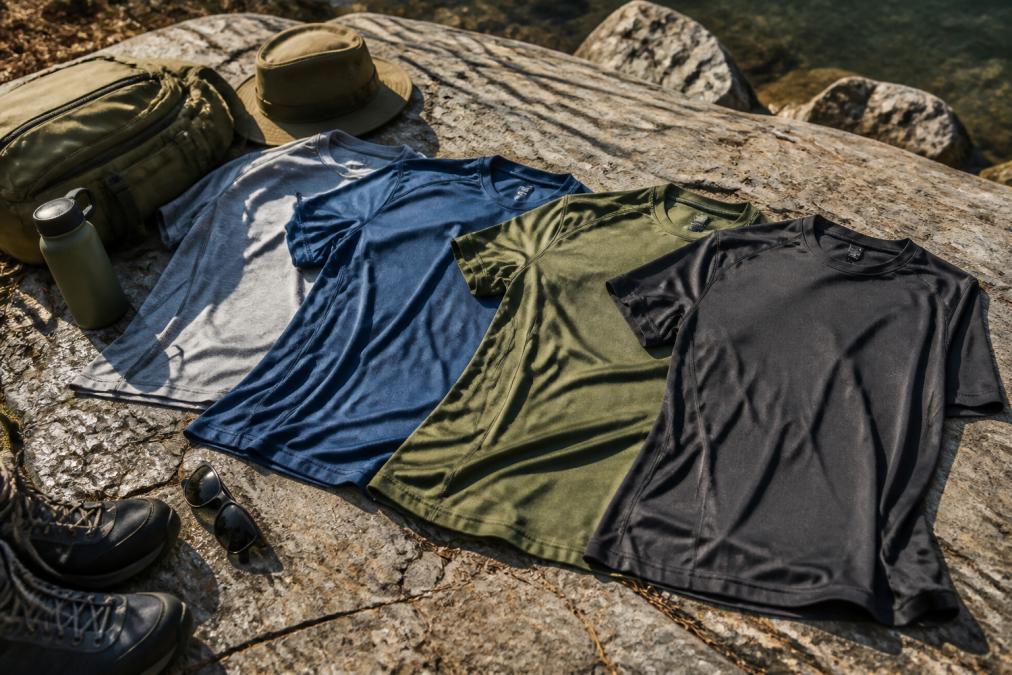
The best moisture wicking outdoor shirts 2026 combine hydrophobic synthetics, ventilation, and odor-resistant treatments to move sweat off your skin before it soaks your shirt. This guide from Golf & Game Apparel covers the fabrics, features, and care habits that separate a go-to shirt from one that sits in the drawer.

Synthetic vs. Natural Fibers: Which Wicks Better?
Synthetic fibers win the wicking contest, and it isn't close. Polyester and nylon are hydrophobic, repelling water rather than absorbing it. Cotton is hydrophilic: it soaks up sweat, holds it against your skin, and dries slowly.
Key Features to Look for in Moisture Wicking Shirts
Focus on four things: fabric blend, breathability, odor control, and fit. Get those right and the shirt performs in heat, humidity, and long days outdoors.
Breathability, Ventilation, and Airflow
Breathability is how easily air passes through the fabric, and it drives evaporation rate. Two shirts with identical fabric can breathe very differently based on knit and design.
Look for these ventilation features:
- Mesh panels under the arms or across the back
- Laser-cut perforations in high-sweat zones
- Lighter fabric weight in the body, reinforced panels where you carry a pack
- A relaxed cut that lets air circulate instead of clinging
Odor Resistance and Antimicrobial Treatments
Odor-resistant treatments keep bacteria from multiplying in the fabric, which is what actually causes the smell. Sweat itself is nearly odorless; the bacteria that feed on it are not.
How to Choose Moisture Wicking Fabric for Your Activity
Match the fabric to your activity. A shirt built for a casual round of golf won't perform like one designed for thru-hiking, and the difference comes down to measurable properties: denier, knit structure, fabric weight in GSM, and blend ratio.
Here's a simple decision framework:
| Activity | Fabric Priority | Key Feature | Why It Matters |
|---|---|---|---|
| Golf | Polyester-spandex blend | Four-way stretch, UPF | Swing freedom, sun coverage |
| Hiking | Nylon-polyester blend | Abrasion resistance, ventilation | Pack straps rub, heat builds |
| Fishing | Lightweight polyester | Quick-drying, odor-resistant | Splash, humidity, long days |
| Hunting | Mid-weight blend | Quiet fabric, thermal regulation | Layering, temperature swings |
| Backpacking | Nylon blend | Durability, fast dry time | Multi-day wear, no laundry |
Climate Changes the Equation More Than Activity
Two hikers on the same trail can need opposite shirts depending on dew point, the temperature at which air can no longer hold its moisture, dictating whether your sweat evaporates or pools.
- High dew point (above roughly 65°F): Sweat can't evaporate efficiently because the air is already near saturation. In these humid conditions, you want the thinnest possible knit, maximum airflow, and a looser cut that lets vapor escape. A tight, high-GSM fabric will feel like a plastic bag regardless of its wicking chemistry.
- Low dew point (below roughly 50°F): Dry desert and high-altitude air pulls moisture off fabric fast. Here, a slightly heavier knit with a sun hoodie cut works better because it manages UV exposure and temperature swings without sacrificing dry time. Evaporative cooling can actually chill you when the air is arid and the wind picks up.
- Wet-and-cold risk: In cool, damp conditions, a fast-drying synthetic matters less than a fabric that keeps a dry layer against your skin. This is where a grid-fleece-backed or brushed interior can outperform a smooth jersey knit.
Body Type and Fit Inclusivity
Fit isn't just comfort, it's a performance variable. Moisture wicking depends on air moving across the fabric surface, and how a shirt drapes changes that airflow.
- Athletic or slim cuts sit close to the skin and move sweat to the surface quickly, but leave little room for air circulation. On a humid day, a snug athletic cut can feel clammy because there's no gap for vapor to escape.
- Relaxed or standard cuts allow more air to circulate between fabric and skin, which helps in high humidity but can bunch under a pack or a mid-layer and cause chafing.
- Extended sizes often scale up length and width without adjusting panel placement. Mesh panels designed for a medium may sit in the wrong spot on a 3XL, leaving high-sweat zones uncovered. Look for brands that publish a size-specific fit chart and show ventilation placement on the actual garment.
- Tall and petite fits matter for layering. A shirt that rides up under a harness or pack belt exposes skin to strap abrasion and UV, no matter how well the fabric wicks.
Layering System Integration
- Base layer (against skin): Should be the thinnest, most hydrophobic piece. Its job is to move sweat off your skin and into the next layer.
- Mid-layer (insulation): Should be breathable enough to let that moisture pass through. A non-breathable fleece traps vapor and pushes it back to your base layer.
- Shell (wind/rain): Should have pit zips or mechanical venting. A fully sealed shell turns any layering system into a sauna, and your base layer will soak from the inside out.
The same shirt rarely tops every category. Owning two or three purpose-matched pieces, humid, arid, and cold-weather layering, beats forcing one shirt to do everything.
Sun Protection Shirts for Hiking: UPF Ratings Explained
UPF, or ultraviolet protection factor, measures how much UV radiation a fabric blocks. UPF 50 lets through roughly 1/50th of the sun's UV rays, blocking about 98% (Sun Protective Clothing). Standard cotton tees often rate only UPF 5 to 10, while purpose-built sun protection shirts for hiking typically hit UPF 30 to 50+.
How UPF Is Actually Determined
UPF is a laboratory measurement, not a marketing claim. In the U.S., fabrics are tested using standards like AATCC 183 and evaluated under ASTM D6603. A fabric must block at least 93.3% of UV radiation (UPF 30) to earn a UV protection label, and UPF 50 blocks 98%. Anything above UPF 50 is labeled UPF 50+ because the testing method can't reliably distinguish higher levels.
What Affects the Rating
- Fabric density: Tighter weaves block more UV. A densely knit polyester blocks more than an open mesh of the same fiber.
- Color: Darker colors absorb more UV than light ones. A black or navy shirt typically rates higher than the same fabric in white.
- Stretch: Fabric stretched tight loses some protection because the weave opens up. A snug-fitting sun hoodie may protect less than a relaxed one in the same fabric.
- Wetness: Many fabrics lose UPF when soaked. Some modern treatments maintain protection when wet, but it's not universal.
- Wear and tear: Abrasion from pack straps, repeated washing, and pilling can thin the fabric and reduce UPF over time.
A sun hoodie extends coverage to the neck and head, which is why thru-hikers and backpackers lean on them for exposed stretches. Check the Skin Cancer Foundation's sun protection guidance for how UPF ratings translate to real-world exposure.
The Sustainability Angle Most Guides Skip
Sun protection and moisture wicking are performance features, but the shirt's lifecycle matters too. A UPF-rated synthetic that loses protection after two seasons and gets tossed is worse for the environment than a slightly heavier one that lasts five years.
- Recycled content: Many performance fabrics now use recycled polyester from post-consumer plastic bottles. The wicking chemistry is identical to virgin polyester, but the feedstock is diverted waste. Look for third-party verification like the Global Recycled Standard (GRS) rather than a vague "eco-friendly" claim.
- Repairability: A snagged mesh panel or a broken zipper doesn't have to end a shirt's life. Some brands offer repair programs or sell replacement parts. A shirt you can repair is a shirt you don't replace.
- End-of-life recycling: A handful of outdoor brands run take-back programs that turn worn-out synthetics into new fabric. These programs are still uncommon, but they're growing, and they're worth checking before you buy.
- Bluesign and similar certifications: These verify that the fabric's production met environmental and safety standards, covering everything from chemical use to water consumption. They don't measure performance, but they do measure impact.
Care Habits That Preserve Both UPF and Wicking
UPF and wicking performance both degrade with the wrong care routine, and the damage is cumulative.
- Skip fabric softener and dryer sheets. They leave a waxy coating that blocks moisture movement and can trap UV-absorbing particles unevenly.
- Wash cold, air dry. High heat can shrink fibers, open the weave, and reduce UPF. It also stresses antimicrobial finishes.
- Turn shirts inside out. This protects the outer face from abrasion in the wash, preserving weave density and any surface treatment.
- Avoid over-washing. Wash after heavy-sweat use, but a shirt worn for a light walk doesn't need a full cycle. Every wash cycle is a small amount of wear.
Moisture Wicking Shirt Care Tips to Extend Performance
Wash wicking shirts in cold water, skip the fabric softener, and air dry when you can, three habits that preserve performance far longer than any detergent brand.
A care routine that works:
- Turn shirts inside out before washing
- Use cold water and a mild detergent
- Skip softener and dryer sheets entirely
- Air dry, or tumble on low if you're short on time
- Wash after every heavy-sweat use to stop bacteria from setting in
Fit, Durability, and Layering for Outdoor Performance
Fit decides how well a wicking shirt works: too tight restricts airflow and range of motion, too loose bunches under a pack or mid-layer.
Frequently Asked Questions
What are the best moisture-wicking shirts for hot weather?
Look for lightweight synthetic fabrics like polyester or nylon with a UPF rating of 30 or higher. These materials pull sweat away from your skin and dry quickly. Features like mesh ventilation panels, flatlock seams, and antimicrobial treatments make a big difference in hot, humid conditions. A good moisture wicking shirt should feel dry within minutes of heavy sweating.
Do synthetic or natural fibers wick moisture better?
Synthetic fibers such as polyester and nylon generally outperform natural fibers like cotton for moisture wicking. Cotton absorbs sweat and stays wet, which can lead to chafing and discomfort. Synthetics move moisture to the fabric surface where it evaporates fast. Some blends combine natural fibers for softness with synthetics for performance, but for intense outdoor activity, synthetics are the reliable choice.
How do I care for moisture-wicking performance apparel?
Wash moisture wicking shirts in cold water on a gentle cycle with mild detergent. Avoid fabric softeners and dryer sheets because they clog the fabric's wicking channels. Tumble dry on low or hang dry to preserve the fibers. Turn the shirt inside out before washing to reduce pilling. Following these moisture wicking shirt care tips keeps the fabric performing like new for years.
Which hiking shirt is best for wicking moisture?
The best hiking shirt for wicking moisture is one made from lightweight polyester or nylon with a UPF rating and ventilation zones. Look for four-way stretch, articulated sleeves, and flatlock seams for comfort under a backpack. A sun hoodie with a hood and thumbholes adds coverage without overheating. Prioritize quick-drying fabric and odor-resistant treatment for multi-day trips.
Choosing the right wicking shirt comes down to matching fabric and features to how you actually spend your time outdoors. Golf & Game Apparel builds versatile, custom-designed apparel that moves from the course to the field without missing a beat, with free shipping on orders over $75 and 30-day free returns. Browse the collection and gear up for whatever the season throws at you.


