Table of Contents
- What Makes Performance Golf Apparel Worth the Investment
- Performance Golf Polos and Shirts: Core Pieces for Every Golfer
- Moisture-Wicking Golf Shirts That Keep You Dry and Comfortable
- Golf Pants with Stretch: Freedom of Movement on Every Swing
- Golf Clothing Fit Guide: Finding the Right Size and Cut
- Golf Layering for Changing Weather: Staying Comfortable Year-Round
- Where to Buy Performance Golf Apparel: Shopping Online with Confidence
- Frequently Asked Questions
Last Updated: October 4, 2026
What Makes Performance Golf Apparel Worth the Investment
Performance golf apparel has become essential for serious golfers, but the investment only makes sense if you understand what separates quality gear from standard clothing. At Golf & Game Apparel, we've designed apparel that serves both the course and the field, which means understanding performance fabrics isn't just about comfort, it's about durability and versatility.
The core difference lies in fabric technology. Standard cotton absorbs moisture and clings to your skin, which slows you down physically and mentally. Performance fabrics pull sweat away from your body, dry quickly, and maintain their shape through hours of wear. When you're focused on your swing, the last thing you need is fabric bunching at the shoulders or clinging to your chest.
Beyond moisture management, quality performance golf apparel resists wrinkles, holds its color through repeated washing, and maintains stretch integrity season after season. This matters because golf demands precision. A shirt that shifts during your backswing or pants that restrict your hip turn will cost you distance and accuracy.
The investment also covers versatility. Real performance gear transitions from the course to casual outdoor settings without looking out of place. You're not buying a one-use item; you're buying a piece that earns its place in your regular rotation.
Performance Golf Polos and Shirts: Core Pieces for Every Golfer
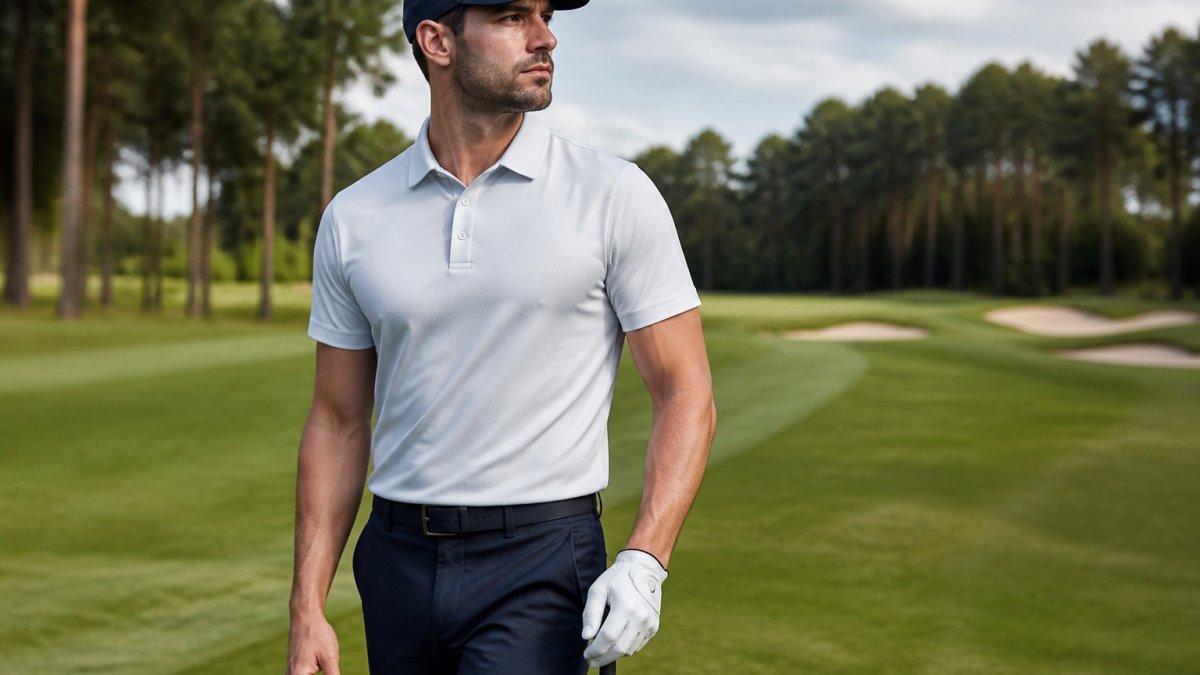
A quality golf polo is the foundation of any course wardrobe, and it's where performance fabrics make the biggest difference. The best polos combine stretch with structure, they move with you without looking baggy when you're standing still.
Look for polos with a textured weave rather than smooth knit. Textured fabrics hide ball marks and minor stains better, and they photograph well if you're sharing your round on social media. The collar should hold its shape through eighteen holes without rolling or curling at the edges. Reinforced stitching at stress points (shoulders, sleeves, hem) signals durability.
Many golfers overlook the importance of sleeve length. Sleeves that hit mid-bicep allow full shoulder rotation without pulling. Too short and you look underdressed; too long and you restrict movement. When trying polos online, check the brand's size chart for sleeve length specifically, not just chest width.
Performance golf shirts designed for warm weather should feature breathable construction, mesh panels or open weaves that allow air circulation. These aren't just comfort features; they keep you mentally sharp when temperatures rise. A golfer who stays cool plays better golf. Layering-ready shirts have a cleaner cut that works under lightweight jackets without bunching.
Golf & Game Apparel's polos blend these features with a custom design philosophy that means you're not wearing the same shirt as everyone else on the course.
Moisture-Wicking Golf Shirts That Keep You Dry and Comfortable
Moisture-wicking technology moves sweat away from your skin to the outer surface of the fabric, where it evaporates. This simple mechanism transforms your on-course experience. Without it, sweat pools against your body, making you feel heavier and playing worse.
The best moisture-wicking fabrics use synthetic fibers like polyester blends or advanced nylon. These materials have a natural affinity for moisture and push it outward rather than absorbing it. Cotton, by contrast, holds moisture and can increase the weight of your shirt by 20-30% when wet. That's not hypothetical, it's why you feel sluggish in cotton after a few holes.
Look for shirts labeled with specific moisture-wicking technology names, though the actual fiber content matters more than marketing claims. A 100% polyester shirt will wick better than a cotton-polyester blend, but blends (70/30 or 60/40 polyester-cotton) offer better feel and durability. Pure synthetics can feel plastic-like against skin, while blends soften with wear.
The construction method also affects performance. Fabrics with a brushed back (the interior side) feel softer while the outer surface remains smooth and quick-drying. This dual-surface approach gives you comfort without sacrificing function.
When shopping for moisture-wicking golf shirts online, check product descriptions for specific fiber percentages. Brands that hide this information are usually cutting corners. Performance golf apparel should list exactly what you're buying.
Golf Pants with Stretch: Freedom of Movement on Every Swing
Golf pants need to handle a full range of motion, from your address position to a complete follow-through, without restriction. Stretch fabric is non-negotiable for modern golf pants, and understanding the stretch type matters.
Four-way stretch (stretch in all directions) outperforms two-way stretch (horizontal stretch only) because your golf swing demands vertical movement too. Your thighs and glutes contract and extend; your waistband needs to accommodate that without fighting back. Pants that restrict vertical stretch will pull at the inseam or waistband during your swing.
The best golf pants combine stretch with weight. Too-light fabric will bag out at the knees by hole nine. You want enough weight to hold its shape but enough stretch to move freely. A 90/10 or 85/15 polyester-spandex blend achieves this balance.
Fit matters more than size. Golf pants should sit at your natural waist, not low like casual pants. A proper golf fit means the rise (crotch to waistband measurement) is slightly higher, which prevents gapping when you bend forward into your address position.
Consider flat-front versus pleated. Flat-front pants look cleaner and modern, while pleats add room in the thigh without increasing waist size. Neither is objectively better, it depends on your body type. Heavier thighs benefit from pleats; lean builds look sharper in flat-front.
Inseam length should hit the top of your shoe without bunching or dragging. Pants that are too long will catch on your heel and look sloppy; too short and you'll show ankle, which reads as an amateur mistake. When ordering online, don't guess, use the brand's inseam chart and measure your own pants for accuracy.
Golf Clothing Fit Guide: Finding the Right Size and Cut
Finding the right fit for golf clothing fit guide standards means understanding how golf apparel differs from everyday clothing. Golf shirts and pants are cut for athletic posture and movement, not standing still.
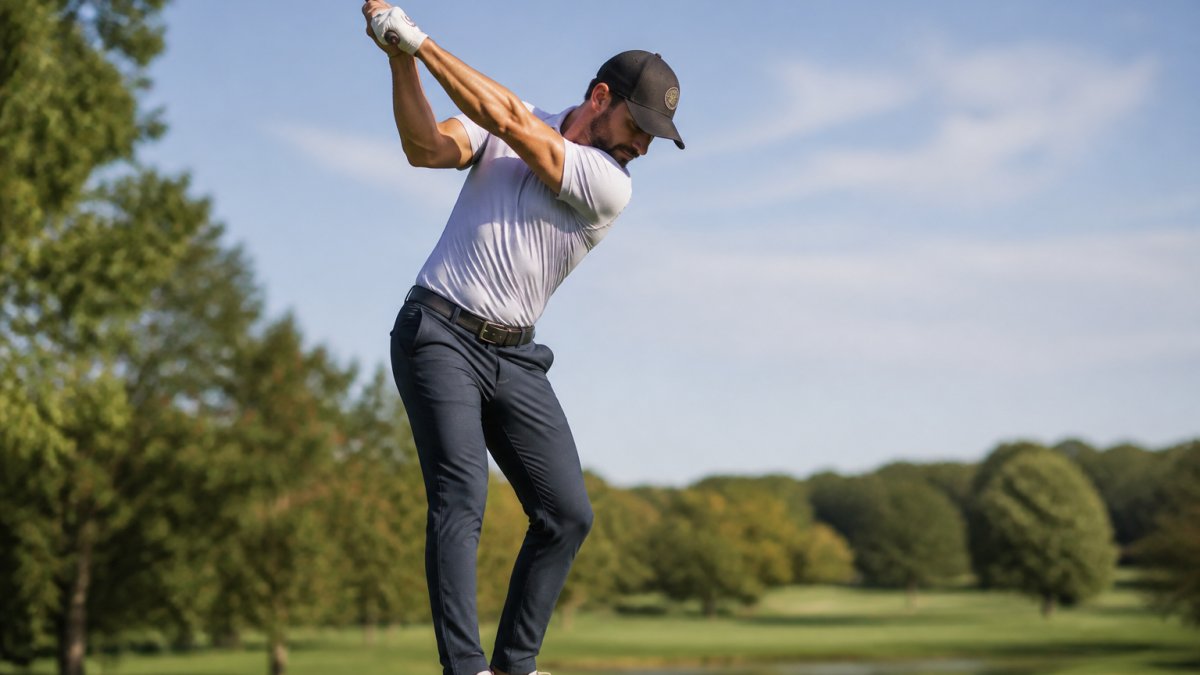
Start with your actual measurements, not your usual clothing size. A golfer who wears a large in everyday shirts might wear a medium in performance golf wear because the cut is more tailored.
The fit should feel snug but not tight. You should be able to move your arms in a full golf swing without the fabric pulling or restricting. Button-up shirts should close without strain across the chest.
Sleeve length is critical and often overlooked. Your sleeves should end at your wrist bone when your arms hang naturally.
For pants, the rise (distance from crotch to waistband) should position the waistband at your natural waist. You should be able to bend forward into your address position without the pants pulling down or the waistband cutting into your abdomen.
The inseam should hit the top of your shoe heel without bunching or dragging. When you stand, there should be a slight break (small fold) at the top of your shoe.
Many golfers find their fit by ordering multiple sizes and returning what doesn't work. Golf & Game Apparel's 30-day free returns policy removes the risk from this approach.
Golf Layering for Changing Weather: Staying Comfortable Year-Round
Layering is how you extend your golf season and stay comfortable as temperatures fluctuate during a round. The key is choosing pieces that work together without adding bulk.
Start with a moisture-wicking base layer, your performance golf shirt. This layer manages sweat and keeps your skin dry. Never skip this step, even in cool weather, because moisture against your skin will make you feel colder as the round progresses.
The mid-layer adds warmth without restriction. A lightweight pullover or quarter-zip in merino wool or synthetic blend provides insulation while remaining breathable. This layer should fit close to your body without bunching under your golf shirt. Avoid heavy sweaters that restrict arm movement or add bulk at the shoulders.
The outer layer protects against wind and rain. A performance golf jacket should be windproof and water-resistant (not necessarily waterproof, which adds weight). The jacket should fit over your mid-layer without tightness. Sleeves should allow full arm extension without riding up during your swing.
The order matters: base layer (moisture-wicking) → mid-layer (insulation) → outer layer (protection). This progression moves moisture outward and traps warm air without overheating you when you're active.
Many golfers make the mistake of dressing for the morning temperature instead of the expected high. You'll warm up during your round, so start slightly cool. You can always add a layer if you're chilled; you can't remove layers you've already worn.
Accessories amplify layering. A lightweight neck gaiter or headband adds warmth without the bulk of a full beanie. Gloves that allow grip (leather with stretch back) keep your hands warm without sacrificing feel.
Where to Buy Performance Golf Apparel: Shopping Online with Confidence
Shopping for performance golf apparel online requires understanding what to look for in product descriptions and how to evaluate retailers based on shipping, returns, and customer service.
Direct-to-consumer brands like Golf & Game Apparel cut out the middleman, which typically means better pricing and more control over quality. When you buy directly from the brand, you're getting the product as the designer intended.
Check product descriptions for specific fiber content percentages. A shirt labeled "performance fabric" without listing the actual materials is hiding something.
Size charts are your best friend. Don't rely on your usual size; use the brand's measurements. Compare the brand's chest width, sleeve length, and inseam to pants and shirts you already own and like. This single step eliminates most sizing issues.
Read customer reviews, but focus on the detailed ones. A five-star review that says "great shirt" is less useful than a three-star review that explains exactly what didn't work.
Free returns matter more than you might think. Golf apparel is personal, what fits one golfer perfectly might feel wrong on another.
Shipping thresholds affect your total cost. Golf & Game Apparel offers free shipping on orders over $75, which encourages you to buy multiple pieces at once. Calculate your actual cost including shipping before comparing prices across retailers.
Secure checkout and transparent privacy policies protect your payment information. Look for "https" in the website URL and clear statements about how your data is used. Reputable retailers display trust badges and security certifications.
Finding the right performance golf apparel means balancing fabric technology, fit, and versatility. You're investing in gear that performs on the course and transitions to everyday outdoor wear.
Frequently Asked Questions
What should I look for in performance golf apparel?
Look for moisture-wicking fabrics that pull sweat away from your skin, breathable materials that allow air circulation, and stretch components that move with your body. Performance golf apparel should feel lightweight, dry quickly, and provide enough room for your full golf swing without excess fabric. Check that seams are flat-locked to prevent chafing, and choose colors that maintain visibility on the course. The best pieces work both on the green and during outdoor activities like fishing or hunting.
How should golf apparel fit?
Golf apparel should fit snug enough to move with your body but loose enough to allow a full range of motion through your swing. Your shoulders should have room to rotate, and your torso should have an inch or two of extra fabric at the sides. Sleeves should end at your wrist bone without pulling up during a backswing. Pants should sit at your natural waist without pinching and allow knee bend without tightness. Avoid anything too baggy, which restricts movement and looks sloppy on course.
What fabrics are best for golf clothing?
Performance fabrics like polyester blends, nylon, and spandex-mixed materials excel in golf apparel. Polyester offers durability and moisture-wicking properties, while nylon provides stretch and quick-dry capabilities. Spandex (typically 2-5% of the blend) adds flexibility without sacrificing structure. Look for fabrics labeled as breathable and lightweight. Many quality golf brands combine these fibers to create garments that perform in heat and humidity while maintaining their shape through repeated washing and wearing.
How do I choose golf clothes for changing weather?
Build a layering system starting with a moisture-wicking base layer, adding a lightweight mid-layer like a quarter-zip pullover for temperature control, and finishing with a wind-resistant outer layer if needed. Choose fabrics that breathe to prevent overheating during activity. Avoid heavy cotton, which retains moisture. Select colors strategically: darker tones absorb heat in cool weather, while lighter shades reflect it in warmth. Keep layers packable so you can adjust as conditions change throughout your round.


