

Table of Contents
- Why Durable Golf Shirts Work for Fishing
- Best Moisture-Wicking Outdoor Shirts 2026
- UPF Rated Golf Shirts for Sun Protection
- Quick-Dry Polo Shirts for Fishing
- Collar Styles and Professional Aesthetics
- How to Care for Your Performance Apparel
- Frequently Asked Questions
Last Updated: October 2, 2026
Why Durable Golf Shirts Work for Fishing
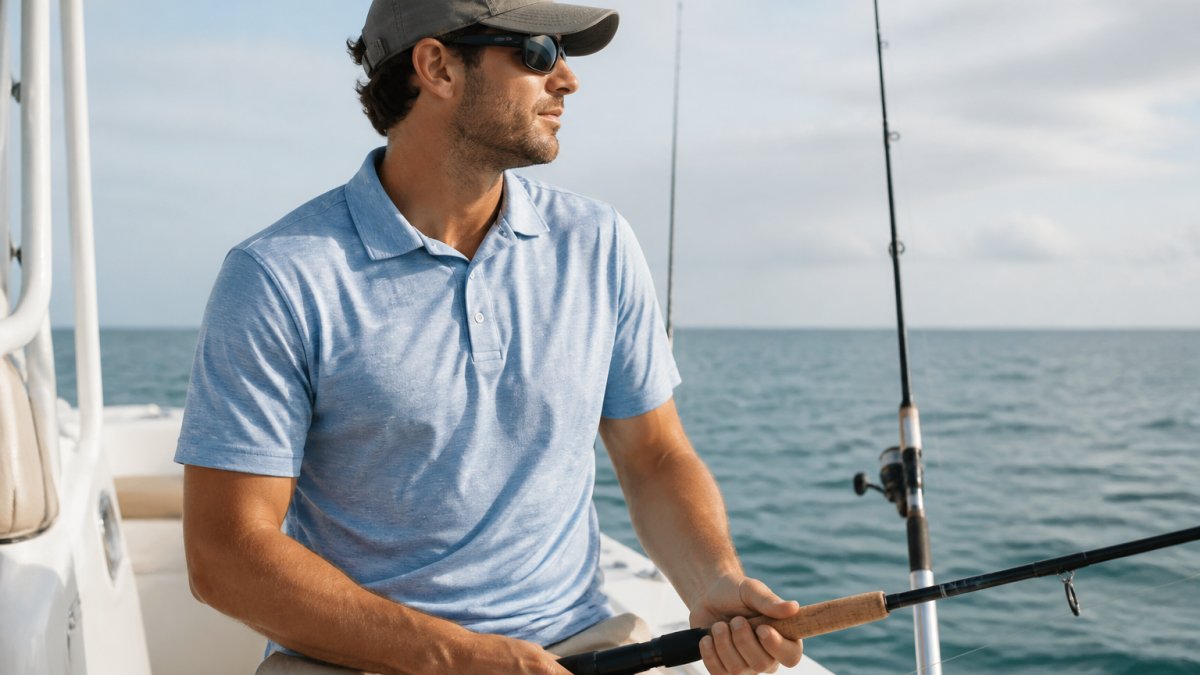
Durable golf shirts for fishing have evolved far beyond the fairway. Their moisture-wicking fabrics, quick-dry technology, and UPF protection translate directly to fishing environments. A durable golf shirt for fishing handles saltwater spray, intense sun exposure, and casting demands without degrading.
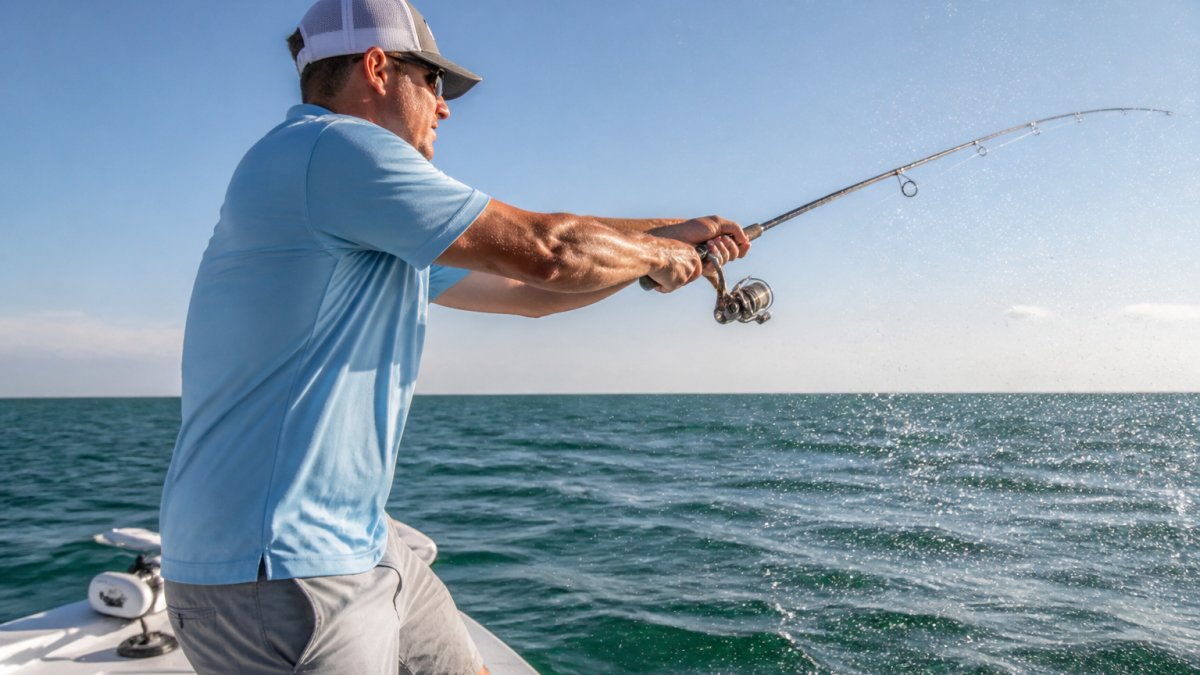
Synthetic blends manage sweat and water differently than cotton. They dry faster, resist odor buildup, and maintain shape through repeated wear in harsh conditions.
Golf & Game Apparel builds apparel that performs equally well on the course and on the water, a practical reality for anglers who want one quality piece for multiple environments.
Best Moisture-Wicking Outdoor Shirts 2026
Moisture-wicking is the foundation of any performance garment. A shirt that moves moisture away from your skin keeps you dry and comfortable during long casting sessions.
Polyester Blends and Synthetic Fibers
Polyester excels at moisture management, pulling sweat outward to evaporate rather than holding it against your skin like cotton. Most quality fishing and golf shirts use polyester with spandex blends.
Spandex adds four-way stretch for full casting motion while maintaining breathability and durability. The fabric resists pilling and color fading through repeated washing and sun exposure.
Weave construction and polyester quality matter more than percentage.
Anti-Microbial and Odor Control Technology
Fishing's warm, humid conditions promote bacterial growth and odor. Many performance shirts incorporate anti-microbial treatments that inhibit odor-causing bacteria.
These treatments are built into the fiber during manufacturing and persist through multiple wash cycles.
The practical benefit: wear the same shirt for multiple days of fishing without odor becoming unbearable.
| Feature | Benefit | Durability |
|---|---|---|
| Moisture-wicking polyester blend | Keeps you dry and comfortable | Maintains performance through 50+ washes |
| Four-way stretch spandex | Full range of motion during casting | Resists pilling and stretching out |
| Anti-microbial treatment | Reduces odor buildup | Effective for 30-40 washes before diminishing |
| Tightly woven construction | Resists snags and abrasion | Lasts longer in rough conditions |
UPF Rated Golf Shirts for Sun Protection
Sun exposure is relentless on the water, intensified by reflection off the surface. A shirt without UPF protection leaves you vulnerable to skin damage even on cloudy days.
Understanding UPF 50+ Protection
UPF 50+ means the shirt blocks 98% of the sun's ultraviolet rays, a tested, standardized rating that allows only 1/50th of UV radiation through the fabric.
Protection comes from tight weaves and sometimes UV-absorbing additives like zinc oxide or titanium dioxide.
UPF protection degrades slightly with washing and wear.
Quick-Dry Polo Shirts for Fishing
Quick-dry performance separates functional fishing apparel from casual wear. A shirt that dries in 2-3 hours beats one that stays damp all day.
Water-Repellent Finishes and Seam Construction
Water-repellent finishes cause water to bead and roll off while allowing moisture vapor to escape, preventing clamminess.
Quality DWR coatings last longer than budget brands.
Flat-lock seams prevent ridges that rub or chafe and are more water-resistant than traditional seams. Reinforced stitching at stress points prevents tearing during active use.
Poor seam construction causes failure first.
(/products/mens-chest-pocket-quarter-zip-pullover) adds warmth without restricting movement. A vest is ideal for core warmth while leaving arms free.Outer layer (wind and water protection): Choose a water-resistant (not waterproof) shell with articulated sleeves so it doesn't restrict your swing.
The Temperature Transition Problem
Early morning is often cooler than midday. Layer so you can remove pieces as the sun climbs.
Each layer should be removable and packable. Your golf shirt stays on all day; the vest comes off around 9-10 a.m.
Choose a vest over a full jacket. It removes easily, packs flat, and doesn't interfere with casting or swinging.
Fabric Compatibility and Layering Mechanics
A moisture-wicking polyester golf shirt works best with a mid-layer that also moves moisture outward. Avoid cotton or dense fleece, which trap moisture.
Best mid-layer fabrics: Merino wool, synthetic fleece with moisture-wicking, or lightweight technical shells with stretch.
Avoid: Heavy cotton sweaters, tight-fitting base layers, and non-stretch outer shells.
The Morning Fishing to Midday Golf Transition
Start with your golf shirt and lightweight vest. Fish until 9-10 a.m., then remove the vest. By 11 a.m., you're ready for the course.
If temperature drops unexpectedly, you have the vest available to add back.
The key is choosing a golf shirt with enough breathability that it performs well as a standalone layer in warm conditions, but enough structure and UPF protection that it's comfortable in cool morning temperatures with a vest underneath.
Seam Placement and Layering Comfort
When you layer, seams become pressure points. A golf shirt with flat-lock seams (safety seams) is more comfortable under a vest because the seam doesn't create a ridge that digs into your skin.
This is one of those details that separates a shirt designed for layering from one that merely tolerates it.
Collar Styles and Professional Aesthetics
Collar design affects both comfort and functionality.
Spread collars and point collars are standard on golf shirts.
The aesthetic matters too. A well-designed shirt looks intentional whether you're on the course or in the boat.
Collar height and fabric weight influence comfort. A higher, stiffer collar can chafe during long casting sessions.
How to Care for Your Performance Apparel
Proper care extends the life of durable golf shirts for fishing significantly.
Rinse saltwater exposure immediately with fresh water.
Wash in cold water with a gentle detergent.
Store in a cool, dry place away from direct sunlight.
Follow these practices and a quality shirt lasts longer with regular use.
Finding the right apparel for fishing and golf requires balancing durability, comfort, and versatility. A quality durable golf shirt for fishing handles multiple environments without compromise, managing moisture, blocking sun, resisting water, and lasting through years of use. Golf & Game Apparel builds every piece with this principle in mind, using premium polyester blends, reinforced seams, and thoughtful design that performs equally well on the course and on the water. With free shipping on orders over $75 and 30-day free returns, you can experience the difference that true performance apparel makes. SHOP THE LIMITED COLLECTION and discover gear that works as hard as you do.
Frequently Asked Questions
Can you wear golf shirts for fishing?
Yes. Golf shirts are designed with performance fabrics that handle moisture, sun exposure, and movement, all demands of fishing. The key is choosing styles with moisture-wicking technology, four-way stretch, and quick-dry fabrics. Look for UPF 50+ protection and stain-resistant finishes to handle saltwater spray, sunscreen, and the elements. Many anglers find golf shirts transition seamlessly from the course to the boat because they combine athletic fit with durability.
What features make a durable golf shirt suitable for saltwater fishing?
Saltwater exposure requires water-repellent finishes, anti-corrosion seam construction, and synthetic fibers that resist salt-induced degradation. Choose polyester-blend fabrics with anti-microbial properties to prevent odor and mildew in humid conditions. UPF 50+ sun protection matters because salt spray intensifies UV exposure. Look for reinforced collar and sleeve seams, as saltwater accelerates fabric breakdown at stress points. Quick-dry technology also prevents salt crystals from setting into fibers.
Are moisture-wicking golf shirts better than cotton for fishing?
Absolutely. Moisture-wicking synthetic fabrics pull sweat away from your skin, keeping you dry and comfortable during long days on the water. Cotton absorbs moisture, stays wet, and dries slowly, inviting mildew and odor in humid fishing environments. Performance fabrics offer thermal regulation, meaning they keep you cooler in heat and provide minimal insulation in cool conditions. They're also more durable against saltwater and sun damage than natural fibers.
How do I maintain the durability of a golf shirt after fishing in saltwater?
Rinse the shirt in fresh water immediately after saltwater exposure to remove salt crystals that degrade fibers. Wash in cold water with mild detergent, avoiding bleach and fabric softener, which damage synthetic performance coatings. Air dry when possible rather than using high heat, which weakens moisture-wicking and water-repellent finishes. Store in a cool, dry place away from direct sunlight. This routine extends the life of your shirt's technical properties and prevents long-term salt damage.


